
Poland's Secretary of State, Wladyslaw T Bartoszewski, has credited Prime Minister Narendra Modi with preventing Russian President Vladimir Putin from using tactical nuclear weapons in Ukraine in late 2022, highlighting Modi's significant influence on the Russian leader.

Former CIA Analyst, Larry Johnson, said on Friday that US President Donald Trump asked US chairman of the joint chiefs of staff, Dan Caine, if they could use the nuclear weapons, but the latter denied.

'We were in a heavily nuclearised environment. China had tested for Pakistan in the 1980s and helped their missile programme stay just one step behind us.'

Pakistan and China are among the countries which are testing nuclear weapons, United States President Donald Trump has said to justify his administration's plans to resume testing of the US's own nuclear assets after a gap of over three decades.
'If the Trump administration could gain access to the nuclear weapons, they would be satisfied -- at least they could control them.'

Kim Jong-un declared he would never surrender North Korea's nuclear weapons weapons even if his country faced 100 years of sanctions. Dr Rajaram Panda explains Pyongyang's new nuclear doctrine that makes the world a much more dangerous place.

Former US President Donald Trump claimed that Iran has agreed to return its "nuclear dust" to the United States as part of broader assurances not to pursue nuclear weapons. He expressed optimism about ongoing negotiations and a potential deal.

Donald Trump stated that Iran has been given a "last chance" to reach an agreement, revealing that the US paused a planned military strike after receiving requests from Saudi Arabia, the UAE, Qatar, and Iran to pursue diplomacy instead.

Earlier, Israeli Prime Minister Benjamin Netanyahu also declared that Iran would never be allowed to acquire nuclear weapons, regardless of any agreement.

India is increasingly focusing on long-range weapons capable of reaching targets across China.

US President Donald Trump has indicated that 'a lot of progress' has been made regarding Iran, suggesting that Tehran has reached out for talks and that developments could become clearer within 48 hours.

US President Donald Trump has declared an 'economic D-Day' against Iran, unveiling what he terms the 'most crushing economic operation ever taken' and warning global entities against providing any support to Tehran.

China has called on Iran to reopen the Strait of Hormuz and expressed appreciation for Tehran's commitment not to develop nuclear weapons, a key demand of the US to end the conflict.

United States and China have agreed that "Iran can't have nuclear weapons," and that the Strait of Hormuz must be opened, according to US President Donald Trump.

Former US President Donald Trump has issued a stern warning to Iran, stating that "nothing will get through" unless a deal or "total surrender" is achieved, amid escalating tensions and conflicting reports on direct negotiations.

Myanmar is working on a nuclear weapons programme, a media report has said, citing expert opinion on leaked photographs.Fears that the country's military junta had joined a clandestine nuclear network linking North Korea, Iran, Pakistan and Syria have been growing for some time, but there has been no hard evidence until now.Now, secret documents and hundreds of photographs smuggled out of Myanmar by a defector indicated that it was intent on developing nuclear weapons.
'India has so far spent Rs 30,000 crores on the ATV, with virtually no side benefits. This equals the entire budget of the National Rural Employment Guarantee Act last year, which generated 45 million person days of employment.'

US President Donald Trump announced that a peace deal with Iran, which includes a commitment from Iran to abandon nuclear weapons, is nearly complete and expected to be signed in Europe this weekend. This development follows Trump's decision to call off military strikes against Iran hours after threatening to take control of its oil industry.
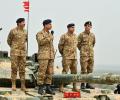
Lieutenant General Syed Aamir Raza's loyalty to Field Marshal Asim Munir during the turbulent times appears to have stood him in good stead, points out Rana Banerji, who headed the Pakistan desk at R&AW.

Israeli Prime Minister Benjamin Netanyahu defended his actions amid growing resentment over an emerging US-Iran deal, asserting that Iran would never possess nuclear weapons. He faced criticism from opposition figures like Naftali Bennett and addressed concerns about Israel's security zones and relations with the US.

A new report from the Stockholm International Peace Research Institute (SIPRI) indicates that India has expanded its nuclear arsenal and is developing long-range weapons capable of reaching targets across China, while also maintaining focus on its rivalry with Pakistan.
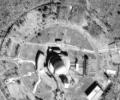
According to recently declassified CIA data, obtained by the National Security Archive under the Freedom of Information Act, the CIA had evidence suggesting close Pakistan-China nuclear cooperation, to the point of facilitating a nuclear weapons capability, although the intelligence community saw this as possibly a special case based on an alliance that had existed since 1963.

The White House has not announced any decision following US President Donald Trump's meeting with his national security team regarding Iran, despite Trump's earlier indication that the discussion would lead to a 'final determination' on the matter.

The idea of weaponization got a fillip from an unexpected quarter. In the last week of October 1985, Rajiv met US President Ronald Reagan. Reagan told Rajiv, 'Pakistan has already made a bomb.' When Rajiv started talking about disarmament, the US president cut him short, 'Don't talk theory, think of your own protection.'
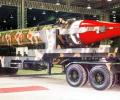
For the world and India, one of the most enduring challenges of the times is for Pakistan's nukes to be neutralised, before they are ever used by the State, their sponsored non-State actors or any rogue elements from the many terror tanzeems dotting Pakistan's unstable landscape, says Lieutenant General Kamal Davar (retd).

US President Donald Trump indicated that a peace deal with Iran is possible, but stressed that military action remains an option if talks fail. He emphasised the need for guarantees against nuclear weapons in any agreement.
With India's growing conventional capabilities and more pro-active military plans, Pakistan's military authorities have begun to emphasise the utility of tactical nuclear weapons, says Michael Krepon.

Speaking to North Korea's Supreme People's Assembly on Tuesday, Kim accused the United States of carrying out 'terrorism and invasions' across regions, referring to the ongoing conflict involving Iran.
Distrust is on the rise and Asian nations are in the race for acquiring nuclear weapons. Nuclear weapons are the deadliest weapons created by man.

US President Donald Trump has claimed that Iran has accepted "just about everything" the United States has demanded in ongoing indirect nuclear negotiations, particularly regarding denuclearisation. He also asserted that American forces repeatedly carried out military strikes that crippled Tehran's military infrastructure, including radar installations, and escorted commercial oil tankers through the Strait of Hormuz. Trump dismissed reports of Iran's strength, stating its military and economy were severely weakened.
North Korea on Thursday said it is dropping out of six-party nuclear talks and will "bolster its nuclear weapons arsenal."
India should shift to a 'flexible response' from the current no first use and minimum deterrence posture. Against China it would be a strategy of dissuasion based on survivable second strike force that could threaten Chinese high value targets. In case of Pakistan, the flexible response strategy would be based on ambiguous no first or second use and a 1,000 point targeting with the aim of annihilation of that entity.
Parliament must insist that the government should direct its Department of Atomic Energy to immediately examine and make recommendations to the government on the structure of an independent surveillance and regulatory authority for the defence nuclear facilities, says Dr A Gopalakrishnan.
Amid growing global concerns over Pakistan's nuclear weapons falling in the hands of the Taliban, the top United States military official on Monday said it remains a "strategic concern" but the atomic arsenal of Islamabad are secure as of now.
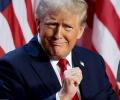
US President Donald Trump announced that a deal to end the war with Iran would be signed on Sunday, with the strategic Strait of Hormuz immediately becoming 'open to all'. This follows indications from Pakistan that negotiations were in their final stages, though Iran has yet to comment on the timeline.

'Once the military starts to draw up plans for using nuclear weapons, then nuclear weapons could be used earlier in a crisis than otherwise.'

Trump's comment marks a shift in his repeated statements that Iran hand over its enriched uranium to the US as a sticking point of any potential deal.

A senior Pakistani defence official, Lt Gen (retd) Mazhar Jamil, claimed that India's long-range missile development indicates ambitions to become a global nuclear power capable of threatening Western capitals, urging international attention to India's military modernisation. He also reiterated Pakistan's commitment to deterrence stability in South Asia.
